

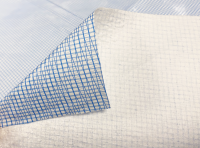
In high-speed converting environments, reinforcement materials are not simply structural add-ons — they are critical performance components. Whether laminating films, foils, papers, or specialty substrates, converters depend on reinforcement layers that deliver strength, stability, and runnability without compromising efficiency. As production speeds increase and tolerances tighten, the expectations placed on reinforcement materials continue to rise. Understanding what converters actually look for in high-performance reinforcement materials helps clarify why engineered composites are becoming the preferred solution.
Dimensional Stability Under Tension
One of the most important characteristics converters evaluate is dimensional stability. During lamination, coating, slitting, and rewinding, materials are placed under consistent mechanical tension. Reinforcement layers must maintain their geometry without stretching unpredictably or distorting under load. Instability can lead to misalignment, curl, wrinkling, or registration issues. Engineered mesh reinforcements such as CLAF® are designed to provide consistent strand orientation and predictable performance under tension, helping maintain laminate integrity throughout the converting process.
Consistency from Roll to Roll
Converters prioritize repeatability. A reinforcement material must behave the same way today as it did on the previous production run. Variations in strand spacing, thickness, or elasticity can disrupt automated systems and reduce yield. Extruded and engineered reinforcement structures provide uniform openings and controlled construction, supporting high-speed lamination and predictable downstream processing.
Strength Without Excess Bulk
Traditional approaches often rely on heavier materials to achieve durability. However, additional weight can create handling challenges and limit flexibility in finished composites. High-performance reinforcement materials are engineered to deliver tear resistance and puncture strength through structure rather than thickness alone. By distributing stress across an oriented mesh or scrim, converters can achieve strength improvements without significantly increasing overall laminate weight.
Compatibility with Adhesives and Coatings
Reinforcement materials must integrate cleanly with adhesive systems and coatings. Surface characteristics, openness, and bonding compatibility all influence laminate performance. Materials with engineered mesh structures allow adhesives to penetrate and anchor effectively while maintaining airflow or flexibility where required. Proper compatibility reduces delamination risk and improves long-term composite durability.
Process Efficiency and Runnability
In converting operations, downtime is costly. Reinforcement materials that track cleanly, resist telescoping, and maintain uniform tension across the web contribute directly to process efficiency. Materials engineered for converting environments are designed to run smoothly through laminators, slitters, and rewinders without introducing variability that could slow production.
Application Versatility
Converters often serve multiple markets including packaging, construction, filtration, and industrial applications. Reinforcement materials that perform across varied end uses provide flexibility and scalability. Engineered composites such as Sycltex® demonstrate how reinforced structures can be adapted for different performance demands while maintaining converting compatibility.
Long-Term Performance in the Field
Beyond manufacturing, converters also consider how reinforced composites will perform in real-world conditions. Tear resistance, dimensional stability, and durability under stress influence the overall reliability of the finished product. Reinforcement layers that localize damage and resist tear propagation add long-term value for end users.
The Shift Toward Engineered Reinforcement
As converting operations grow more sophisticated, the demand for precision-engineered reinforcement materials continues to increase. Converters are looking beyond basic scrims or generic mesh layers and instead prioritizing materials that offer structural consistency, predictable performance, and integration across diverse laminate constructions. Reinforcement is no longer an afterthought — it is a critical design component that influences efficiency, quality, and product longevity.